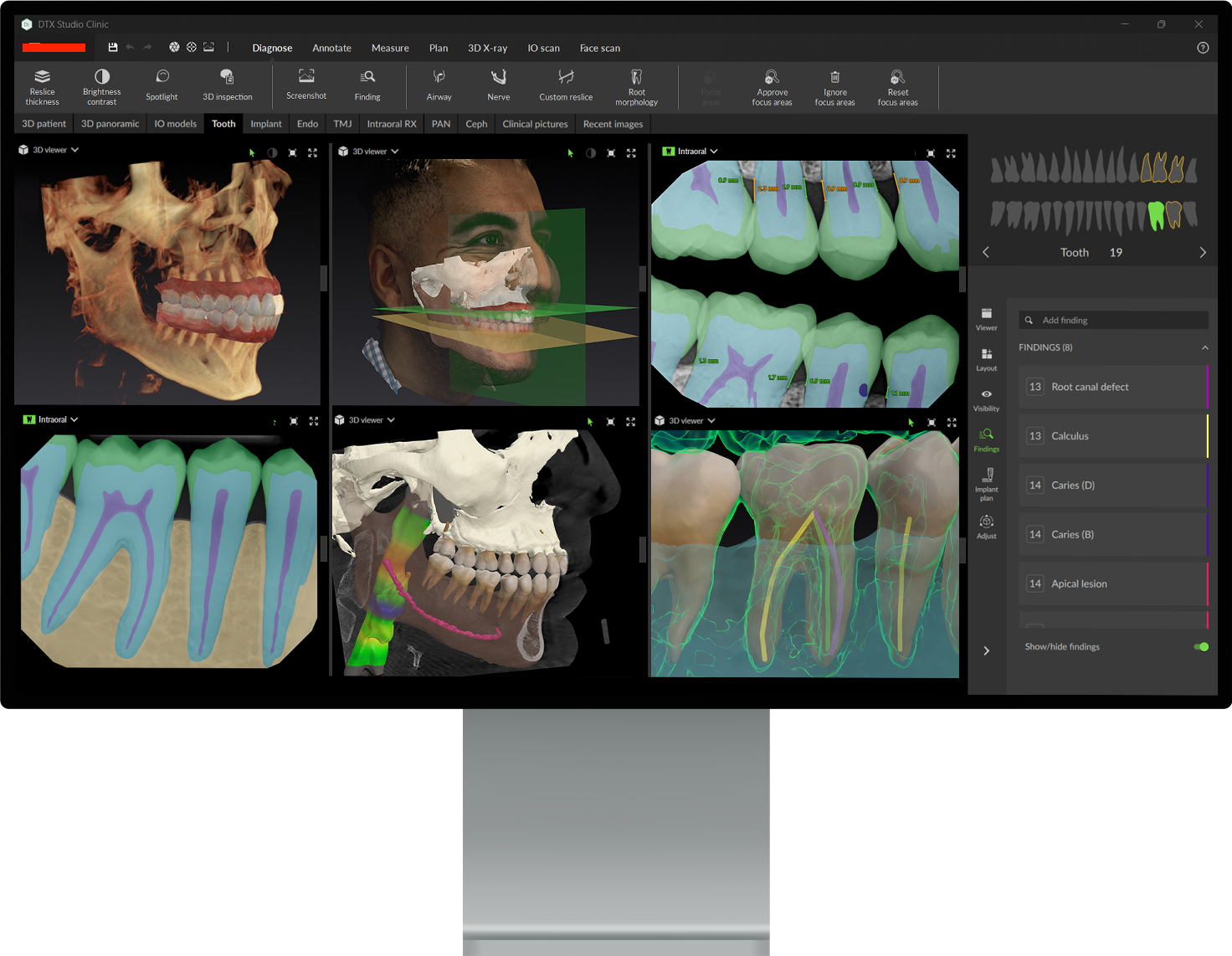
Cone Beam Computed Tomography (CBCT) and digital X-rays are advanced imaging technologies that provide highly detailed, 3D and 2D views of your teeth, jaws, and surrounding structures.
CBCT allows clinicians to visualize the precise anatomy of bone, nerves, and sinuses, which is essential for implant surgery planning and achieving restorative-driven surgical outcomes.
By using CBCT scans, dentists can accurately determine optimal implant positions, evaluate bone quality and quantity, and plan procedures that maximize function, esthetics, and long-term success.
Digital X-rays complement CBCT by offering fast, high-resolution 2D images with reduced radiation exposure compared to traditional film, helping clinicians detect cavities, bone loss, and other oral health issues quickly and safely. Together, these technologies improve diagnostic accuracy, enhance treatment planning, and allow patients to better understand their treatment journey. They also reduce procedural risks, shorten treatment times, and support more predictable, comfortable, and personalized care.
Benefits of CBCT & Digital X-Rays for Patients
Precise Implant Planning:
3D CBCT scans allow for accurate assessment of bone, nerves, and sinuses to ensure safe and effective implant placement.
Restorative-Driven Surgical Outcomes:
Planning procedures digitally ensures implants and restorations are aligned for optimal function and esthetics.
Early Detection of Dental Issues:
Digital X-rays provide high-resolution images that help detect cavities, infections, or bone loss early.
Reduced Radiation Exposure:
Modern digital imaging uses less radiation than traditional film X-rays, making it safer for patients.
Enhanced Communication & Visualization:
Patients can see detailed images of their teeth and jaw, improving understanding and confidence in their treatment plan.
Faster, More Comfortable Experience:
Digital imaging is quick, non-invasive, and provides immediate results, minimizing time in the chair.
Predictable & Personalized Care:
Detailed imaging allows dentists to plan and execute treatments tailored to each patient’s anatomy and goals, improving long-term outcomes.